
The Privilege of An Audience Q&A
A few weeks ago, I laid my eyes on Grace Wang’s Risograph artist book, The Heart Has Not Stopped. Something inside of me stirred.
The book is 76-pages long with a multi-coloured silk that is hand-bound around the cover. The silk is frayed, far larger than the book itself. So, it wraps around, spilling over the edges, obscuring the bold black title written underneath it. I would learn later that each silk cover is torn from a piece of one of Wang’s photographs, making each cover unique. Inside, dreamy photographs of flowers and skies, shadows and light, grass and skin. The Risograph ink, never fully dried, left imprints on the whites of the pages, maybe even on my fingers. As I flipped through the book, the silk brushed against my arms like warm summer air.
By the blessing of the CONTACT Photography Festival, public programming and funding for the arts, I got to attend a conversation between Grace Wang, Howsem Huang, publisher and CONTACT Festival Manager, Brian St. Denis. If you missed the festival in May, don’t fret because CONTACT’s core exhibitions are still on. Anyway, of course the conversation was fascinating; outlining the process of Risograph printing, of Wang’s relationship with nature, of shooting and editing multi-exposure film. When St. Denis turned to the audience for any questions, I of course was bursting with enthusiasm to speak. I only really had one question, about the title, but I didn’t want the answer as much as I just wanted to keep hearing about this book. To share and to hear from other people who, like me, were moved by it. To keep exploring why and what it means to her and what it means to us.
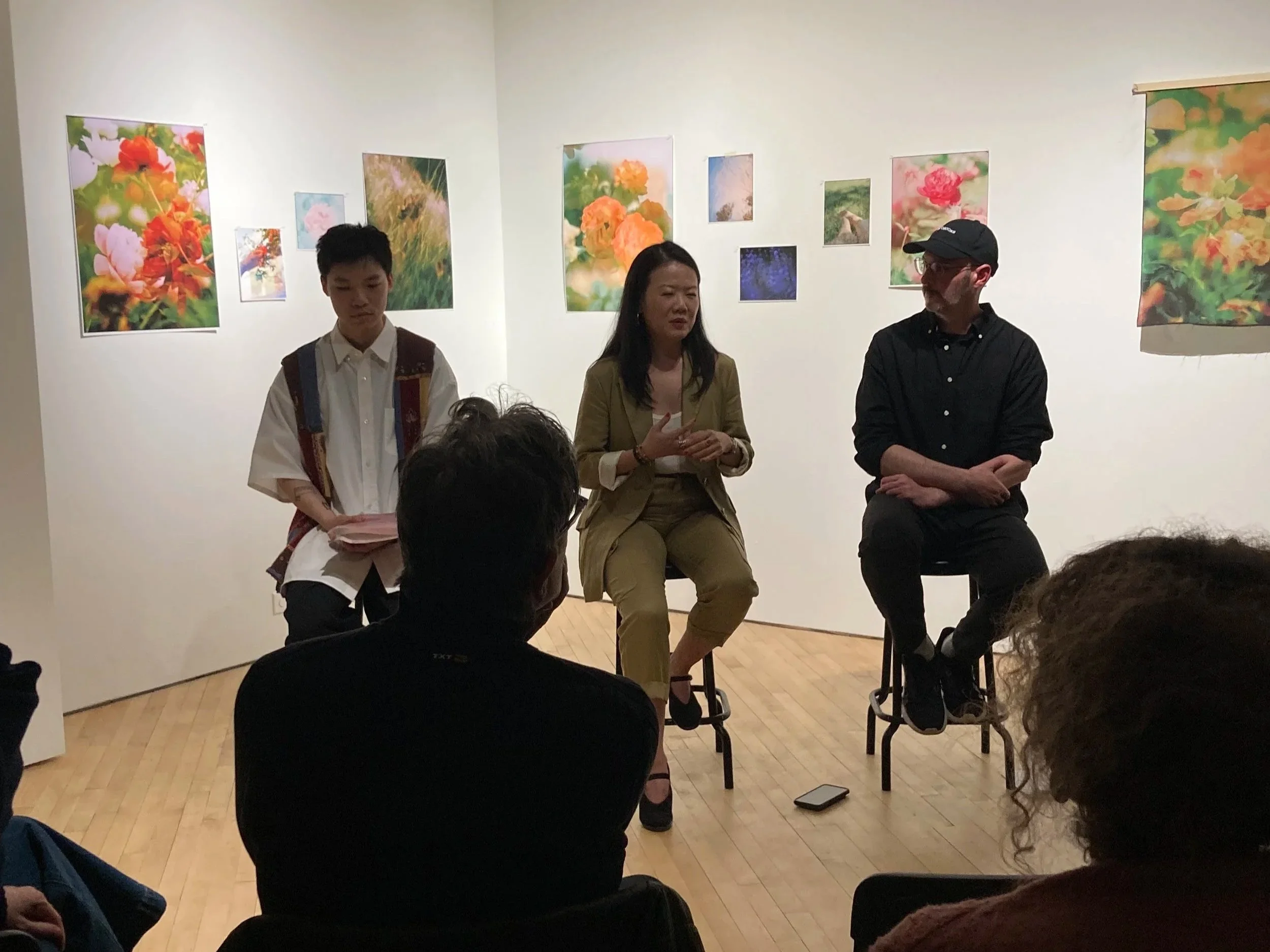
Audience Q&As can be pretty emotional experiences, don’t you think? I find that I usually feel at least one of the following at some point:
Embarrassment (for someone I think asked a stupid question)
Anger (when people just want to assert their opinion and don’t even ask a question)
Nervous (when I consider asking a question that I actually want an answer to but also that I also think makes me seem pretty smart and thoughtful about art but also what if I’m wrong)
I didn’t ask anything in the end, again realizing I didn’t want an answer as bad as I wanted Grace Wang to know that I enjoyed her art, thought deeply about it and was grateful she made it. I bought her book, instead. Would I have bought it if I hadn’t asked a question? Or what if I had another way of imprinting this meaningful experience onto me? Why do I even feel the need to, can’t I just enjoy a piece of art and get on with my life? Why do I feel a need to attach myself to it? Who knows! In a pretty condescending National Post article about audience Q&As, Calum Marsh reflects on something similar;
“Maybe it’s best then, to think of the Q&A not as an engagement with the talent on stage, but as a guileless display of vulnerability from a well-meaning, earnest crowd?”
As an artist and enjoyer of art, I can be pretty critical (let’s be real- snobbish) of how people engage with it. But, I guess I’ve never experienced a moderator turning to the audience to ask if they have any questions and being met with silence. I’d probably feel troubled about it. Really? No one has anything to say? Not even the guy who “actually has more of a comment”? No one feels moved to say anything?
In an interview with Slant about her film Showing Up, a movie about the creative process of an artist, Kelly Reichardt says:
“Thats what we’re focused on: people that want to have that impulse and want to make things. Maybe they have small audiences where they can show. […] But even if that doesn’t happen, you still need to fill that void of time. It doesn’t get rid of the compulsion to want to make things.”
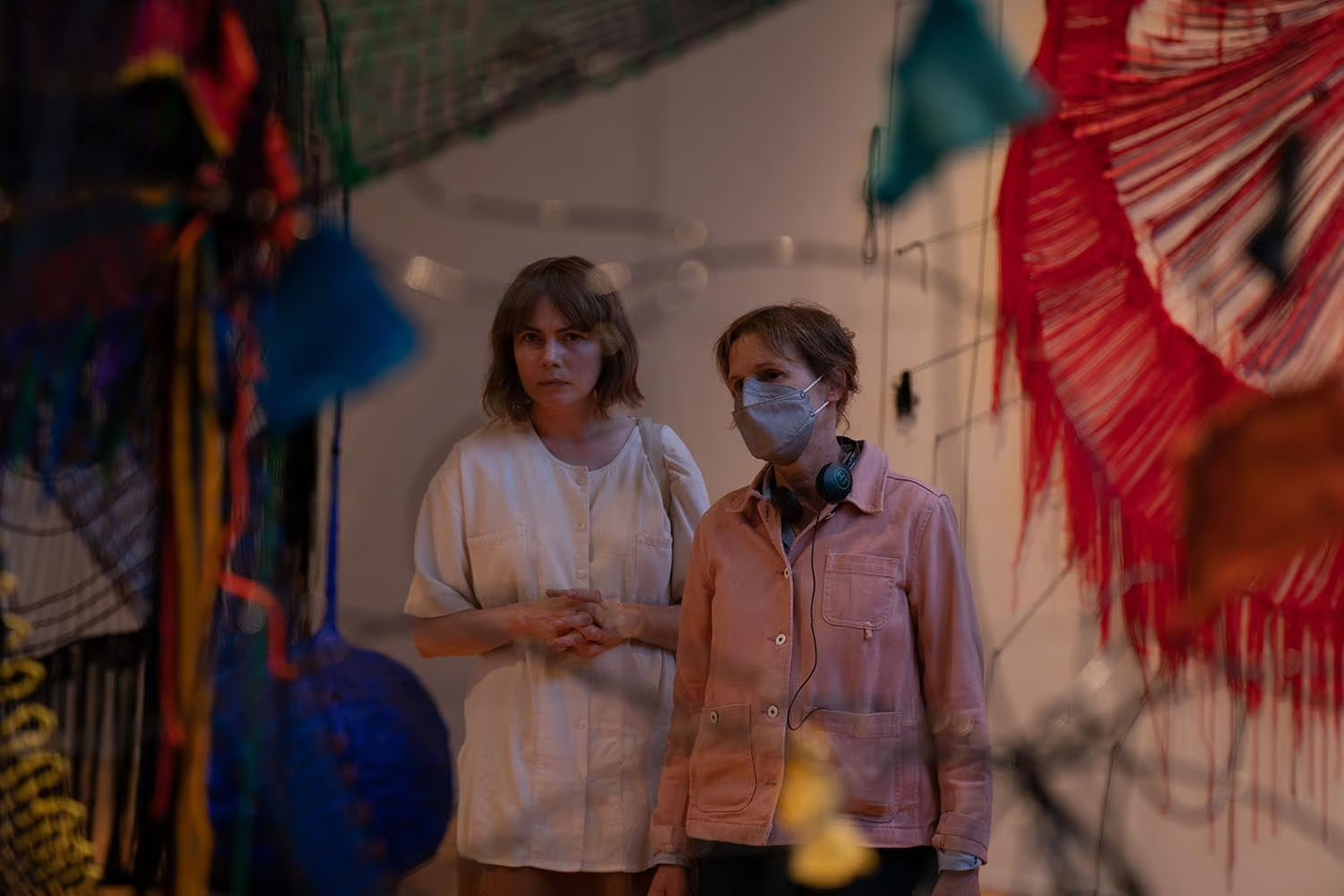
Photo: A24
If everyone were like me, sitting in an audience Q&A and pondering why they felt compelled to ask a question before they did, that void of time would be spent in silence. I think it is good to question our impulses, but I guess what I’m trying to say is that the audience Q&A is going to happen whether I like it or not. I don’t have to speak up if I don’t want to, but thank goodness for all those who do. Who create without questioning or indecision. Who ask without letting nerves or embarrassment stop them. The process of creating art doesn’t end when you show it, it lives on through everyone who interacts with it. So, make your art and ask your questions! What a privilege to bear witness to it all!